

Key Takeaways
• Tip fees at NSW transfer stations (council waste facilities) are charged by weight and/or vehicle type. A standard ute load of general waste typically costs $80–$180, depending on the council area.
• Some councils offer cheaper rates for residents compared to commercial operators. Bring proof of address and check the facility’s accepted material list before loading up.
• Heavy materials like concrete, soil, and bricks attract a different rate than general household waste. It is important to note that some facilities charge by the tonne for these streams.
• Hazardous waste, including asbestos, chemicals, and tyres, is not accepted at most standard transfer stations as these require specialist licensed disposal.
• Compared to self-tipping, 1300 Rubbish is often more cost-effective once you factor in vehicle hire, tip fees, loading time, and multiple trips for large clean-outs.
What Are Tipping Fees?
Tipping fees, also known as gate fees or disposal fees, are charges levied by waste disposal facilities for accepting and processing waste materials. These fees cover the operating costs of the facility, including labour, equipment maintenance, environmental monitoring and regulatory compliance. The total tipping fee will depend on the type of waste disposed as well as the amount.
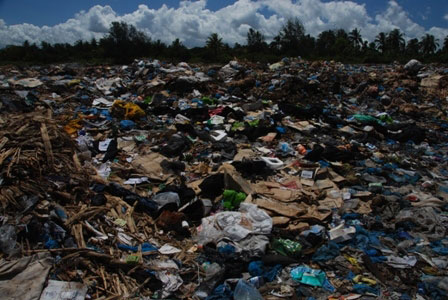
Tipping Fees in NSW by City
These figures are approximate. Always check with your local rubbish disposal facility for exact rates, minimum charges and booking requirements.
Tipping Fees and Charges in Sydney
General mixed waste
This includes mixed household junk, furniture, mixed materials like plastic, glass, metal, timber and more. However, general mixed waste generally excludes food waste, liquid waste, asbestos and other hazardous materials. If your disposal consists of wet or organic components, it may be charged as putrescible waste.
- Price is approximately $390 per tonne
- On average, there is a minimum charge of 100-120kg which usually is around $30
Green waste:
Green waste includes anything from small tree branches, grass clippings, leaves and weeds
- Prices may range from $155 to $330 per tonne
- Some facilities may offer free drop-off for green waste under a certain weight limit for residents
- For oversized green waste, including logs and stumps over a certain diameter, these disposals may incur higher rates($360 – $397 per tonne)
Construction & demolition waste
The minimum charge for the following is 1 tonne on average.
- Clean concrete: Around $22 – $30 per tonne
- Oversized concrete: Approximately $28 – $40 per tonne
- Concrete & brick mix: Around $28 – $30 per tonne
- Asphalt: Around $40 per tonne
- Roof Tiles: Around $22 – $24 per tonne
Note: If your rubbish disposal consists of unsorted and contains various materials, you may be charged at a higher rate.
Hazardous Materials
These require special handling and disposal, leading to higher costs.
Asbestos:
- Costs range from around $600 – $760+ per tonne
- Minimum Charge: Can be around $45 – $89 for smaller quantities of up to 60kg
- Note: Before disposal, all asbestos must be double wrapped in heavy duty plastic, sealed and declared. Many facilities require advance booking and have set drop-off windows, so be sure to confirm scheduling and booking requirements in advance. Friable asbestos is typically not accepted at standard tips.
Paint (Household quantities):
- Paint will typically be charged by container size, not paint volume
- Price is approximately $6.90 per litre of container capacity
- Alternatively, you may be able to drop-off your paint for free at your local community recycling centre
Bulky items, white goods, special items (often charged per unit)
These are often charged per item, or at a very high per-tonne rate due to their volume and processing requirements.
Mattresses:
- Around $40 – $96 per item
- Or $900 per tonne with a minimum charge (e.g. $36 for 60kg)
Motorbike and Car Tyres:
- Around $20 – $60 per item
- Or $600 per tonne with a minimum charge
Refrigerators, freezers & air conditioners:
- Around $15 – $30 per unit
Empty gas bottles (6-20kg):
- Around $3.50 – $40 per item depending on size and site
Recyclable materials (often free for households)
Many facilities encourage recycling by offering free drop-off for properly sorted recyclables. Items can include e-waste (televisions, computers, printers and laptops), paper and cardboard, scrap metal, vehicle batteries, household batteries and mobile phones, glass bottles and jars. However, recyclable materials that are disposed of for free differ by site, so make sure you check what is accepted and the requirements before you go.
Tipping Fees and Charges in Newcastle
General Solid Waste Loads
Mixed general waste (non-putrescible):
Non-hazardous mixed waste including wood, paper, glass, plastics, metal, plasterboard, non-food organics, bricks, tiles and concrete
- Charge $379 per tonne
- Minimum $54 (100 kg)
Mixed general waste (putrescible):
Food waste (excl. grease trap), manure, nappies, incontinence pads and sanitary items
- Charge $434 per tonne
- Minimum $64 (100 kg)
Special or difficult waste:
Includes contaminated waste, animal carcasses, offensive, clinical and difficult-to-handle waste.
- Charge $526 per tonne
- Minimum $75 (100 kg)
Asbestos:
Needs to be wrapped prior to disposal and drop-off must be booked in advance.
- Charge $604 per tonne
- Minimum $89 (60 kg)
Sorted general waste loads
Cardboard:
- Must be clean, dry, flattened and have no wax coating or tape
- $68 per tonne with a minimum of $11
E-waste:
- Commercial/ non-residents (TVs, PCs, printers, kitchen appliances and tools): $278 per tonne
- Newcastle residents ONLY (household e-waste): first 10 items free per visit
Garden organics:
- Includes lawn clippings, prunings, branches, and tree stumps but NO food
- $170 per tonne with a minimum of $26
Mixed domestic recyclables:
- Includes yellow-lid bin items
- $171 per tonne with a minimum of $27
Recyclable bottles & containers:
- Includes glass, plastic and cans
- $68 per tonne with a minimum of $11
Scrap metal:
- Includes white goods excluding fridges, freezers, bike frames and car parts
- FREE of cost and no minimum spend
Soft plastic:
- Must be clean and have flexible plastic packaging
- $68 per tonne with a minimum of $11
Unit-Priced Items
The price for the following waste categories are per item and will be in addition to tonnage charge if included in a mixed load.
- Batteries (lead-acid/car): Free for households, $14 per item for commercial purpose
- Fridges, freezers & air-con: $47 each
- Gas bottles (6–20 kg): Free for households, $34 per item for commercial purpose
- Mattresses (all sizes): $47 each
- Solar PV systems: $15 per panel, Li-ion solar batteries: $3 /kg, minimum of $30, Inverters: free
- Tyres (car & motorcycle): $43 each
Tipping Fees and Charges in Woollongong
Household waste
Mixed general waste:
- Includes any household rubbish, paper, glass, plastics, metal, plasterboard, non-food organics, bricks, tiles and concrete
- $463.49 per tonne
- Mininum charge of $9.25 (≤ 20 kg)
Garden organics & wood waste:
- Includes branches, clippings, prunings. Excludes any food.
- Costs $174.00 per tonne
- Minimum charge of $17.50 (≤ 100 kg)
Commercial & business waste
Mixed general waste:
- Costs approximately $463.49 per tonne
- Minimum charge of $92.70 (≤ 100 kg)
Garden organics & wood waste
- Costs $174.00 per tonne
- Minimum charge of $35.00 (≤ 100 kg)
Sorted & recyclable loads
Cardboard:
- Must be clean, dry and flattened
- $68.00 per tonne with a minimum charge of $11.00
Electrical waste:
- Commercial/ non-residents: $278 per tonne
- Households: First 10 items free per visit
Mixed domestic Recyclables:
- Includes any yellow-bin items
- $171 per tonne with a minimum charge of $27
Bottles and containers:
- Includes glass, plastic and cans
- $68 per tonne with a minimum charge of $11
Scrap metals:
- Free of cost
Soft plastics:
- Must be clean and have flexible packaging
- $68 per tonne with a minimum charge of $11
Unit-Priced Items
- Mattresses: $46.50 each
- Fridges, freezers & air-cons: $15.00 each
- Car & motorcycle tyres: $10.50 each
- Car & motorcycle tyres (with rim): $22.00 each
- Light truck & 4WD tyres: $19.00 each. With rim $36.00 each
- TVs, computers & peripherals: Free
Factors that Affect Total Tipping Fee in NSW
Waste Classification:
Facilities set tipping fees by grouping waste into categories including household rubbish, construction debris, garden clippings, hazardous waste and more. This is because each category requires different handling and carries its own risks. For example, household rubbish can be compacted and buried while construction debris requires crushing or screening and asbestos or contaminated soil must follow strict safety protocols. As a result, tipping fees vary depending on the waste classification.
Weight or Volume Basis:
Tipping fees are often set on a per-tonne basis, with scales or tiers that may adjust for small loads or unusually large deliveries. In cases where weighing isn’t practical, flat-rate fees and disposal rules apply based on estimated volume or by item count (e.g. per mattress or tyre).
Special Handling Surcharges:
Materials requiring additional screening, separation or chemical treatment incur extra fees. For example, asbestos must be double-wrapped, labelled and buried in isolated cells under strict EPA oversight and electronic waste needs to be dismantled and separated from batteries and plastics for recycling.
These surcharges allow operators to safely manage high-risk materials while meeting all regulatory requirements.
Regional Levies:
State-imposed charges, like the NSW Government’s EPA Waste Levy, are added on top of a facility’s base gate fee to determine the total tipping cost, which is commonly raised each year. The NSW EPA levy breakdown involves:
- 20% to operations
- 10 % to environmental issues
- 70% to government coffers
- $170 per tonne
Where the facility is located also affects the total cost. This is because metropolitan sites typically charge more than those located in regional areas due to higher land costs and costs involved.
Environmental Regulations and Levies:
Landfill operators must meet strict environmental standards, and the added costs including monitoring, pollution controls and long-term site care, are accounted for in the total tipping fee. Additionally, some regions apply government waste levies, which further raise the overall disposal price.
The Importance of Tipping Fees
Covering Costs and Expenses
Tipping fees fund the day-to-day running of waste facilities, from building and maintaining landfill cells to servicing machinery and paying staff. Without these fees, operators couldn’t afford essential upgrades or routine repairs, which keep sites safe and reliable for every load that arrives.
Environmental Protection
Tipping fees also contribute to complying with strict environmental regulations, managing pollution, like methane and leachate, and funding long-term post-closure care of landfills.
Incentivising Reduction & Recycling
Higher fees, especially due to government waste levies, make landfilling more expensive. This in turn encourages individuals and businesses to reduce waste, reuse items and recycle.
Call 1300 Rubbish Same Day Rubbish Removal
Whether you need urgent rubbish removal service, bulky item removal or eco-friendly recycling solutions, our experienced team is ready to help. Available seven days a week, we handle residential and commercial clean-ups with flexible scheduling and transparent pricing. We service Sydney, Newcastle and Wollongong. Contact us for a free estimate now.
FAQ
Is the tipping fee the same for all states in Australia?
No, tipping fees vary across Australian states and territories. This is primarily due to differing state government waste levies, which vary in rate and regional application. Local council and private operator costs for facility operation also contribute to these price differences.
Who pays the tipping fee?
The tipping fee is paid by whoever brings the waste to the disposal facility. This could include individuals or households directly dropping off their own rubbish, various businesses hauling their commercial waste or even waste collection companies who pay on behalf of their residential customers.
How is the NSW EPA Waste Levy applied to tipping fees?
The NSW EPA Waste Levy is a charge per tonne applied to waste sent to landfill. Waste facilities pay this levy to the EPA (Environmental Protection Agency) and then pass the cost directly onto customers as part of the tipping fee. The levy rates are higher in metropolitan areas such as Sydney, compared to regional NSW. This is to incentivise waste reduction and recycling.